Aerospace/
Aerodynamics
Static fire test of WARP, a student-run rocket organization I engineer for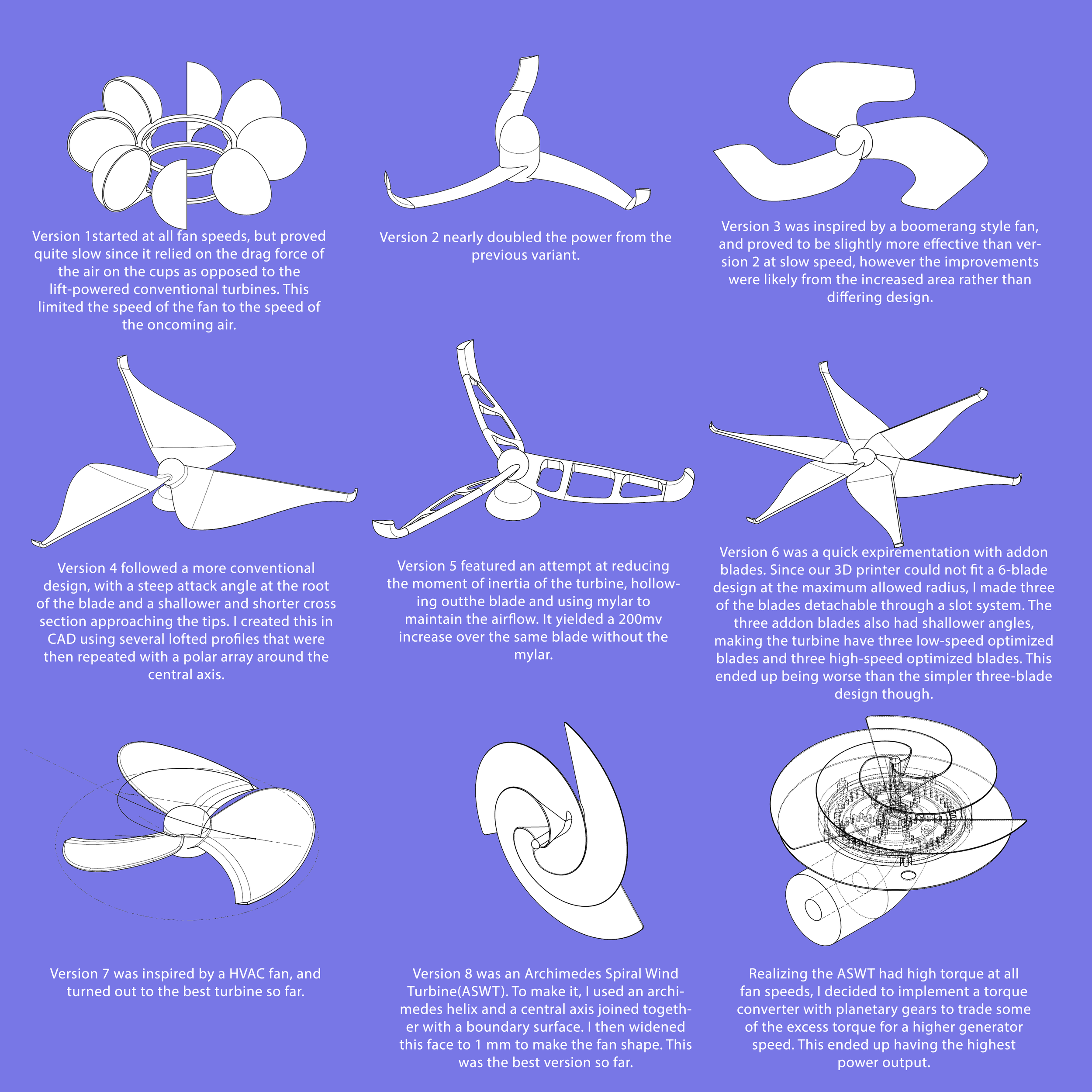
Wind turbines
Wind Power was an event in the 2024 Science Olympiad. The challenge was to develop a homemade wind turbine with a radius of < 12cm. The blade is connected to a motor and a voltmeter to calculate the power output. For the competition, a sum of the voltages the fan-produced at low/medium/high fan speeds was calculated for the total score.
Shown here is an animation of version 9. Although industrial wind turbines use gearboxes, they were not practical to implement on our scale. The planetary gears serve as a 4:1 torque to angular velocity conversion. This build did not quadruple the power of version 8, but that was likely because of friction between the gears and limitations in torque.
Air Trajectory
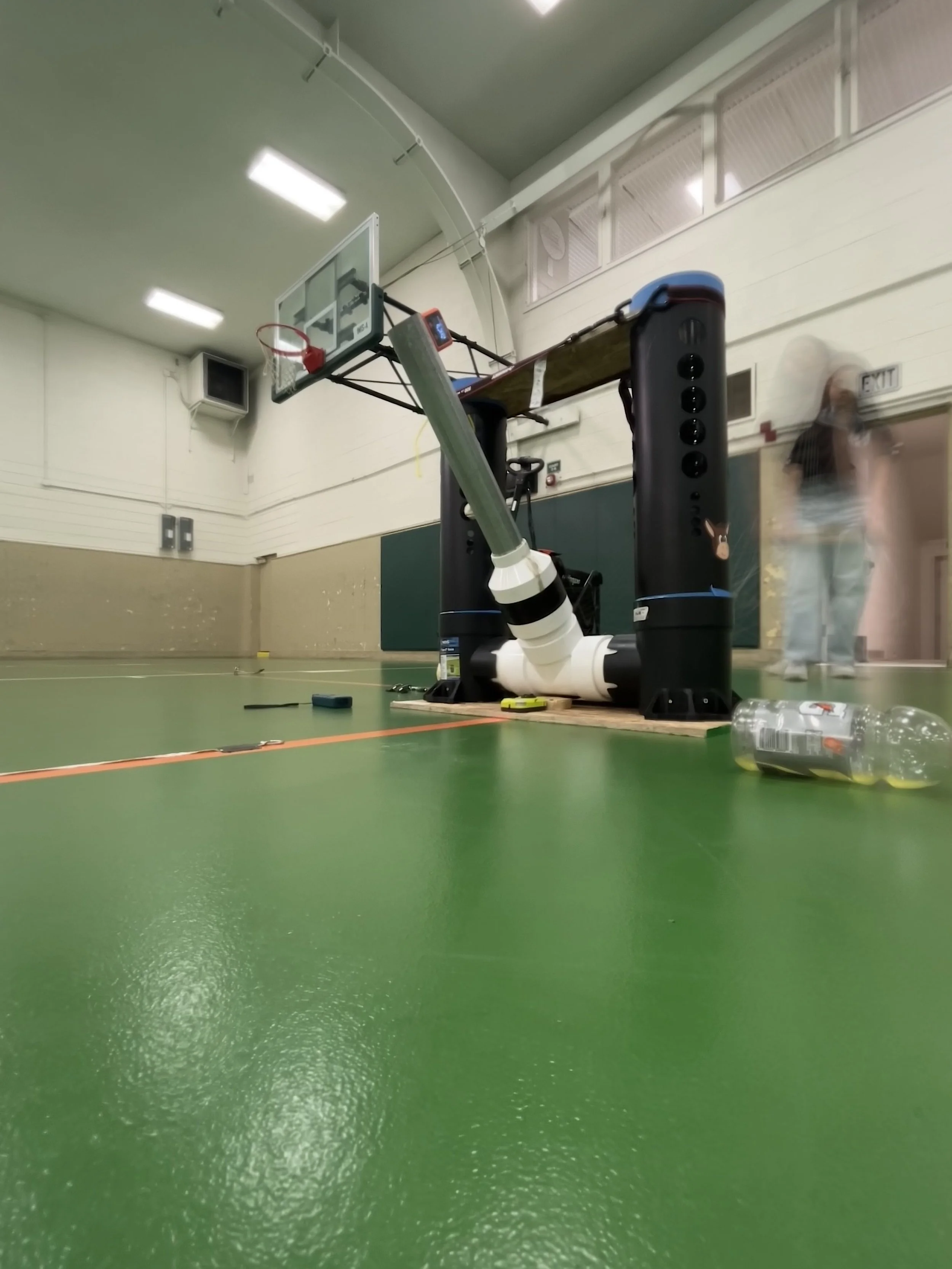
Air Trajectory was an event in the 2024 Science Olympiad. The task was to make a cannon that fits in a 75cm cube that converts gravitational potential energy with a limited weight into air pressure which then propels a projectile towards a precise point anywhere from 2 to 8 meters away.
The final idea we settled on was using a wide PVC tube with a mass inside that forms a seal, pushing air as it went. Although we had seen other teams use this design, we found that the conventional single chamber struggled to cover the whole range of possible values. I prototyped a design that instead used two chambers, and this proved to be effective since it had almost twice the power to reach long distances, but also one of the pistons could be held stationary while the other fell to provide the precise, small power required for near shots. By adjusting the height of the stationary piston, the power could also be varied since some of the air would escape into the other piston depending on how high it was raised, reducing the air entering the barrel and propelling the projectile. Using slow-motion analysis, we realized that the ball initially launched before both pistons reach the bottom. To ensure maximum power output, we drilled vent holes in the top halves of the pistons so that the masses accelerated without putting air pressure under the projectile and only pressurized the system when they were already moving quickly, delivering a faster and more powerful push of air.
After states, we also realized that if we upgraded the pistons to 6-inch diameter ABS tubes, we could get enough power to use racquet balls instead of the classic ping pong ones, which suffered inconsistency due to their very light weight and variability by air currents and density. We used a chain link fence pole as our barrel and cut through existing PVC attachments to make them fit the unconventionally sized ABS pipes.
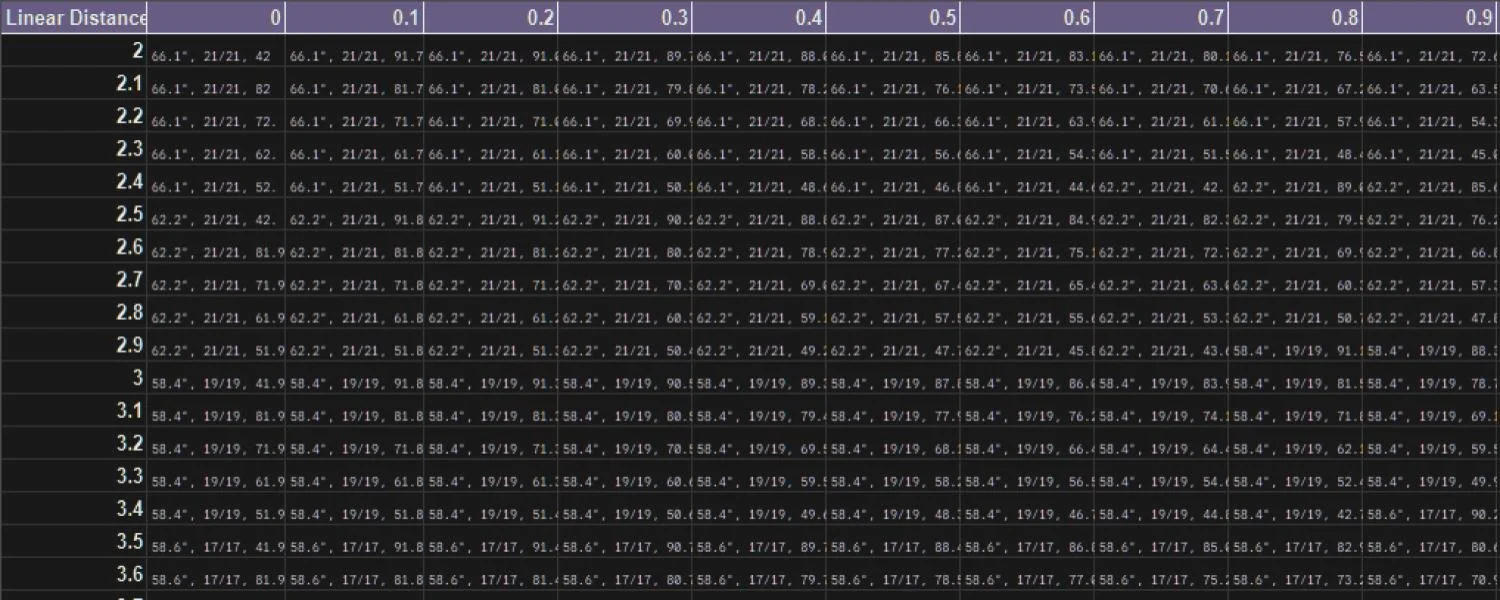
Since we had to change both the angle of the barrel and the power settings to reach a desired point, a linearization proved impractical. Instead, my partner realized that we had around 70 extra cm within our launch area, meaning that we could move the cannon and only calibrate every 0.25 meters, as opposed to going through hundreds of calibrations to get every necessary data point.
Click above!

Awards:
2nd place 2024 Virginia States(out of 177 Virginia teams)
14th place 2024 National Tournament @ Michigan State University out of 7800+ national teams. Sponsored by Lockheed Martin.